
Marion County 24-Hour Feed Is Absent
The official finding is direct: neither the Multi-County Correctional Center nor the Marion County Sheriff publishes a searchable roster, a released-person filter, or a rolling 24-hour release list. The sheriff sends jail inquiries to MCCC. MCCC tells callers how to ask if a named person is incarcerated, but it gives no public list URL, update schedule, retention period, or photo field. A blank local web search therefore cannot show who left today.
This absence changes the right task. First ask whether the person remains at MCCC. If the answer is no, request the exact release or transfer entry for the same period. Ohio jail standards require commitment and release-to-agency details in the jail's internal records. Those records can show whether MCCC custody ended through bond, time served, a court order, or a handoff. They can also identify a receiving agency when custody continued elsewhere.
Marion County Phone-Only Release Check
MCCC's inmate information gives the official first step. Call 740-387-7434 and press 2 to ask whether the named person is currently incarcerated. Staff do not supply court dates and times through that channel, so a court question belongs with the court. Have the person's full name and another sound identifier ready when possible. Similar names can lead to a false match.
The phone check answers only current custody. Follow a negative response with a narrow question about the release or transfer date and destination. If staff cannot provide that detail by phone, ask who holds public records for MCCC and the Marion-Hardin Corrections Commission. The wider 72-Hour Releases process uses a larger exact interval when one day may not cover the event.
Note: Record the date and time of the call because a later custody change can make an earlier answer look inconsistent.
Check Marion County 24-Hour Releases
A same-day check works best as a short chain of official sources. Each source answers a different question. MCCC proves whether its physical custody has ended. The release entry supplies the exact time, authority, and possible destination. A court docket shows the legal order, while Ohio VINE supplies a custody-change alert that still needs confirmation.
- Fix the interval. Write a start and end date with times rather than asking only for “today.”
- Call MCCC. Use 740-387-7434, option 2, to ask whether the person remains incarcerated.
- Seek the jail record. Ask for the existing release or transfer entry covering that exact interval.
- Check the right court. Use Marion Municipal Court for local misdemeanor, bond, and preliminary matters or Common Pleas eServices for felony cases.
- Corroborate the result. Check Ohio VINE, then follow any receiving agency named in a transfer record.
A named-person inquiry may need more history than a one-day interval provides. The full Marion County released inmate search separates county jail, state prison, court, federal, and immigration custody paths.
Marion County Release Fields to Request
There are no public feed columns to describe. Instead, ask MCCC for fields that Ohio jail standards and the county research support. A narrow request is easier to locate and less likely to be misunderstood as a demand for new research. It should seek an existing standard report or the release entries already kept in the jail-management system.
| Requested field | What it can establish |
|---|---|
| Name and booking number | Links the exit to the correct commitment. |
| Booking date and time | Defines when this MCCC custody period began. |
| Release or transfer date and time | Shows when MCCC custody physically ended. |
| Release authority or type | Identifies bond, court order, sentence completion, or another legal basis when recorded. |
| Receiving officer or agency | Distinguishes community release from continued custody after transfer. |
| Charge and commitment authority | Connects the booking to the right Marion court case. |
Ask for exempt material to be redacted rather than withholding the whole record. A transfer destination may be limited by law in some cases, but the custodian should state the basis for any denial. Online absence is not the same as lawful destruction. MCCC's adopted retention schedule controls older records.
Note: A property receipt can support the timing of processing, but it does not by itself show the legal release type.
Marion County Same-Day Release Request
Use concrete timestamps. Ask: “Please provide the existing MCCC release/transfer report, if maintained and producible through standard jail-management reporting functions, for the stated start date and time through the stated end date and time, including booking number, name, booking date, release/transfer date/time, release authority/type, and receiving agency where applicable, with exempt fields redacted.” If the wording is too broad, ask the custodian how the system keeps these records and revise the interval.
The Marion County Sheriff's records page offers a public-record portal and policy, but MCCC is run through the Marion-Hardin Corrections Commission. Begin with MCCC at 1514 Victory Road, Marion, OH 43302, 740-387-7434, and ask which office is the correct custodian. Do not assume the sheriff's fee schedule applies to the commission. Ohio public-record law permits a request for an existing electronic report when the system is already programmed to produce it, but it does not compel an office to create a new list.
A request may cover all exits in the interval or one named commitment. The broad form answers who moved during the day. The named form is better when identity or custody history is the main concern. In either case, ask for release and transfer entries together. Requesting only “releases” can hide a jail departure that continued as state, county, or other agency custody.
Marion County Bond Release Processing
MCCC has a local split that affects same-day release checks. Its instructions say Marion Municipal Court cash and corporate bonds are paid at MCCC. Municipal bonds may also be paid through the facility's online payment route with the inmate ID and basic information. Marion Common Pleas bonds, by contrast, must be posted at Common Pleas in downtown Marion. That court-specific routing can explain why a payment source differs between two MCCC cases.
Payment is not a release timestamp. Staff may still need to match the payment, complete identity and property steps, check other warrants or detainers, and enter the final movement. The docket can prove that bond was posted or ordered, yet the MCCC entry remains the stronger record of the actual exit. If another agency takes custody, the final event is a transfer rather than community release.
The official MCCC screen below documents the phone custody check and Marion bond routing. Its source is the MCCC inmate-information page.
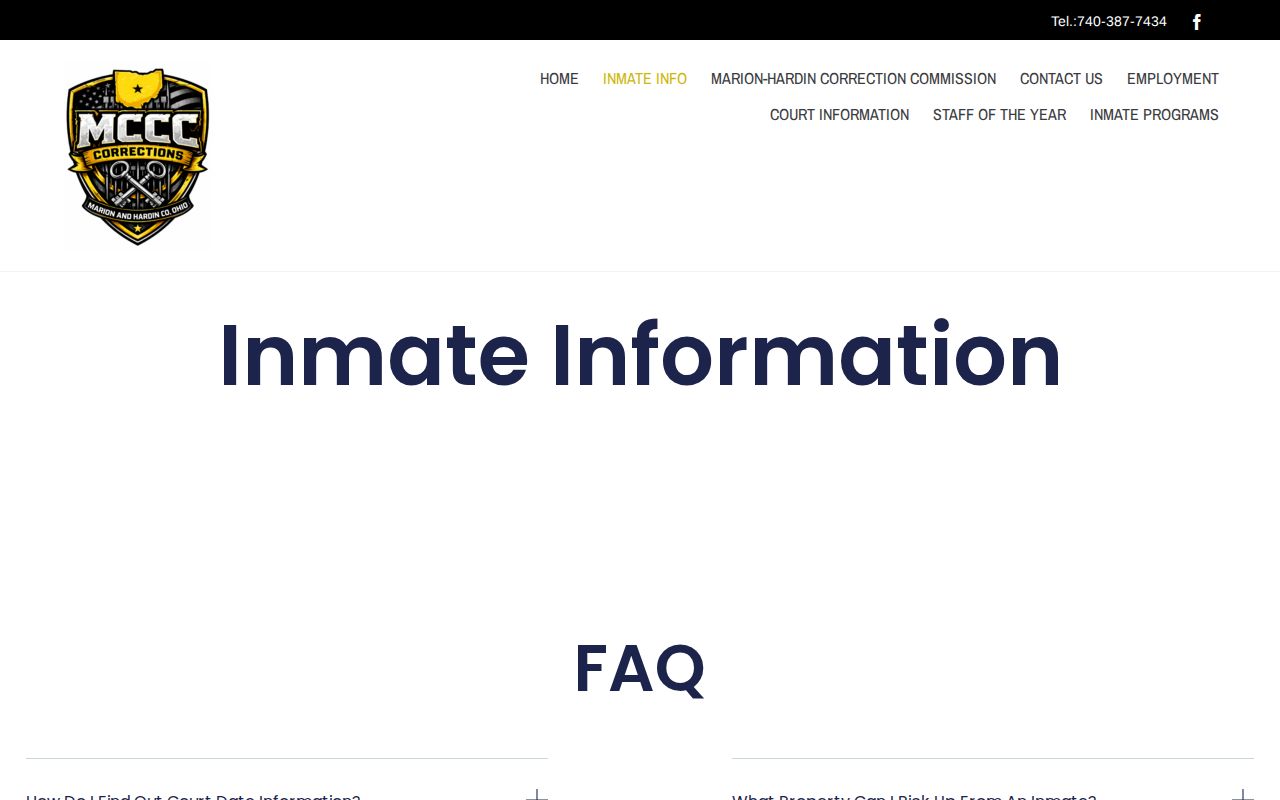
The image supports the local fallback path, not the existence of a public same-day list.
Marion County Sheriff App Release Limits
A genuine Ohio Marion County Sheriff app exists, but its public listing describes news, crime tips, and interactive public-safety features. It does not promise an inmate search, recent-release list, or booking-photo gallery. Installing it should not be presented as a way to browse Marion County releases from the last day. Apps with similar names from other states or counties are not substitutes.
The official App Store listing shows what the sheriff app claims to provide.
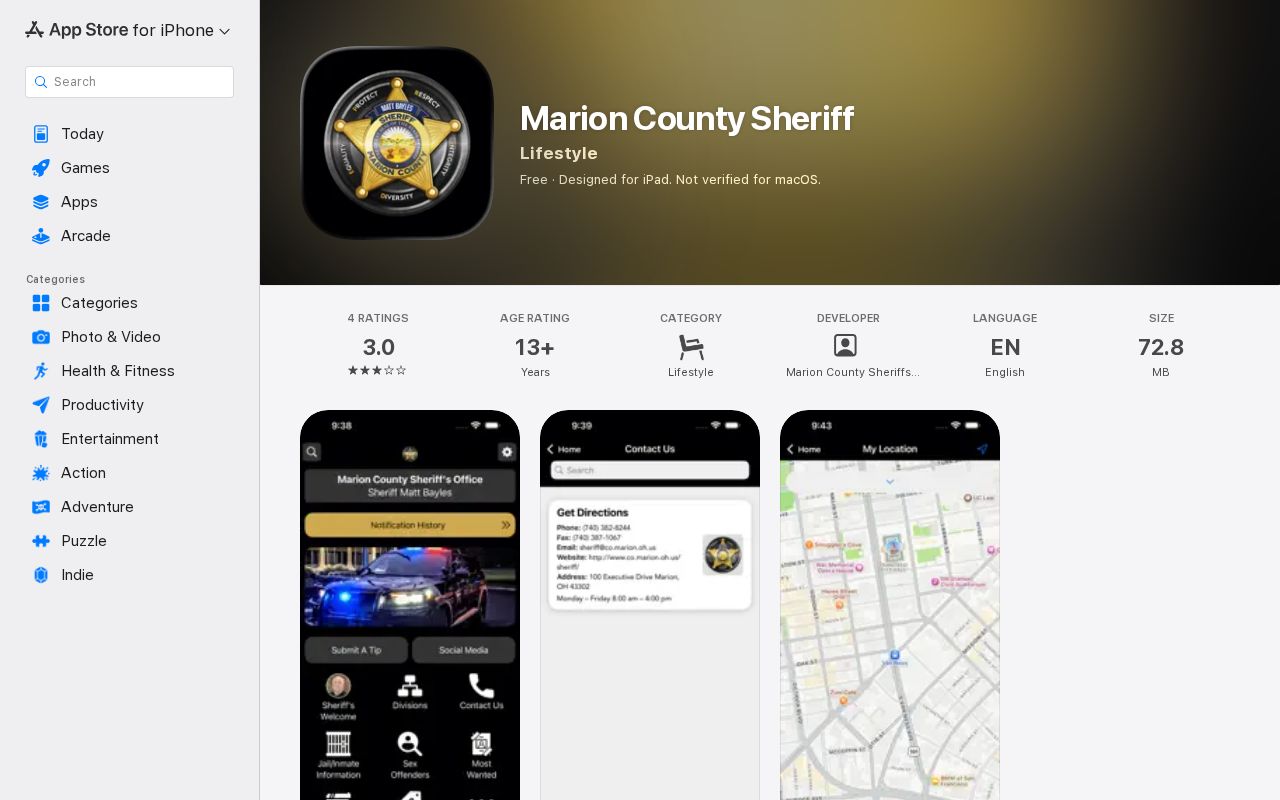
Its listed features support news and tip functions, while Ohio VINE remains the documented custody-alert route.
Ohio VINE can send a notice for a county-jail release or transfer when registration occurs while the person is in custody. A VINE event is a useful second signal. It is not a release certificate, and a transfer event should lead to the receiving agency.
Marion County Custody and Release Paths
A person still at MCCC is in regional jail custody. Someone transferred after a felony sentence may next appear in the Ohio Department of Rehabilitation and Correction system. Search ODRC only when the case points to state prison, because it does not cover a person whose only custody was at MCCC. An ODRC status of APA Supervision can mean release from prison under parole or post-release control, while “Released” may describe a person whose state custody has ended within the database's scope.
For a local case, match the MCCC exit with the court order. Municipal Court warns that online judicial action may take at least 24 hours to post, so same-day silence is expected. A Common Pleas sentence to ODRC explains why someone left MCCC but did not go home. VINE may post before another public system refreshes. When sources conflict, keep the retrieval times and ask the office that owns each record to reconcile its field.
Note: A person who remains at MCCC is still in custody; a dated release or transfer record explains what happened next.